Don't miss our holiday offer - up to 50% OFF!

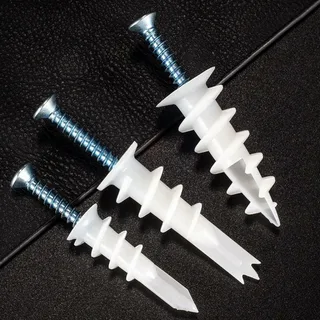



General Purpose Drywall
$0.80
Drywall (also commonly called plasterboard, wallboard, gypsum board, or sheetrock) is a flat, rigid building panel used primarily for constructing interior walls and ceilings in residential, commercial, and industrial buildings. It serves as a smooth, durable surface over structural framing (like wood or metal studs) to create partitions, enclose spaces, and provide a base for finishes like paint, wallpaper, or tile.
Drywall (also commonly called plasterboard, wallboard, gypsum board, or sheetrock) is a flat, rigid building panel used primarily for constructing interior walls and ceilings in residential, commercial, and industrial buildings. It serves as a smooth, durable surface over structural framing (like wood or metal studs) to create partitions, enclose spaces, and provide a base for finishes like paint, wallpaper, or tile.
Key Characteristics:
Composition:
Core: Primarily gypsum plaster (calcium sulfate dihydrate), a naturally fire-resistant mineral.
Facing: Front and back layers of thick paper or fiberglass matting that reinforce the core and provide a surface for finishing.
Additives: May include materials to enhance moisture resistance (green board), fire resistance (Type X), or mold/mildew resistance.
Standard Sizes:
Thickness: Typically 1/2 inch (12.7 mm) for walls, 5/8 inch (15.9 mm) for ceilings or fire-rated walls. Thinner (1/4 inch) or thicker (up to 1 inch) options exist for specialty applications.
Width: Usually 4 feet (1.2 m) wide, with lengths ranging from 8 feet to 16 feet (2.4 m to 4.9 m) to minimize seams.
Advantages:
Cost-effective: Faster and cheaper to install than traditional plaster.
Fire-resistant: Gypsum core contains water molecules that release as steam when heated, slowing fire spread (especially Type X drywall).
Versatile: Easily cut, shaped, and finished to create seamless surfaces.
Sound-dampening: When combined with insulation, it reduces noise transmission between rooms.
Common Uses:
Interior walls and partitions.
Ceilings (including suspended/drop ceilings).
Archways, bulkheads, and curved surfaces (using flexible drywall).
Repairing damaged plaster or masonry.
Installation:
Panels are screwed or nailed to wooden/metal studs.
Seams are taped and covered with joint compound (“mud”) to create a smooth, monolithic surface before painting.
Reviews
There are no reviews yet.