Don't miss our holiday offer - up to 50% OFF!

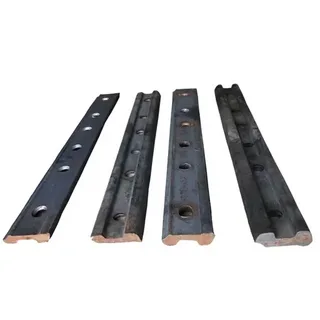
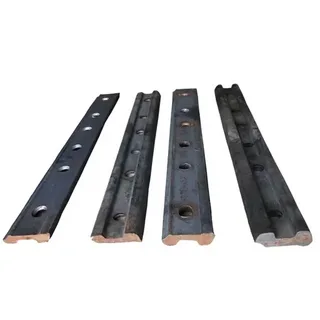
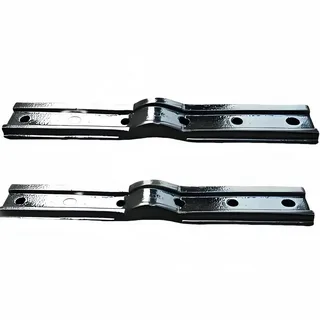
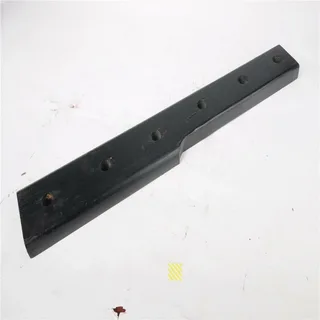

Rail joints
$30.00
A railway joint (also called a rail joint, track joint, or fishplate joint) is a mechanical connection that links two adjacent sections of railroad rail, allowing them to function as a continuous track while accommodating thermal expansion, manufacturing tolerances, and maintenance needs. It is a critical component in traditional rail systems to maintain alignment, stability, and safety across vast networks of track.
A railway joint (also called a rail joint, track joint, or fishplate joint) is a mechanical connection that links two adjacent sections of railroad rail, allowing them to function as a continuous track while accommodating thermal expansion, manufacturing tolerances, and maintenance needs. It is a critical component in traditional rail systems to maintain alignment, stability, and safety across vast networks of track.
Key Characteristics:
- Purpose:
- Absorbs thermal expansion and contraction of rails due to temperature changes (prevents buckling or cracking).
- Provides a flexible connection to accommodate minor misalignments during installation or ground movement.
- Facilitates track maintenance and replacement of damaged rail segments.
- Common Types:
- Bolted Joint (Fishplate Joint):
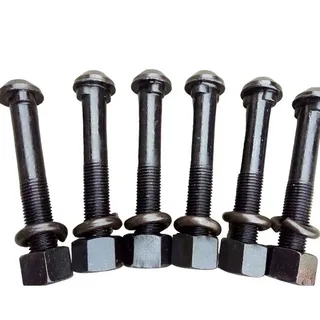
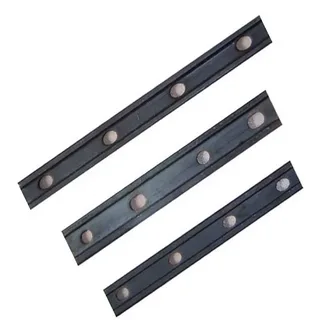
- Uses fishplates (metal bars with holes) clamped to both sides of the rail ends using bolts and nuts.
- Most traditional type; requires regular inspection for bolt tightness.
- Welded Joint:
- Thermite welding or electric flash-butt welding fuses rail ends into a continuous length, eliminating gaps.
- Reduces noise, wear, and maintenance but is less flexible for repairs.
- Insulated Joint:
- Electrically isolates rail segments for signaling systems (prevents current flow between blocks).
- Uses non-conductive materials (e.g., fiberglass or special polymers) between fishplates.
- Bolted Joint (Fishplate Joint):
- Components:
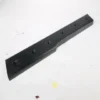
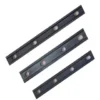
- Fishplates: Steel bars shaped to match the rail profile, drilled for bolts.
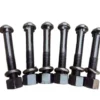
- Bolts, Nuts, and Washers: Secure fishplates to rails (often torqued to high specifications).
- Rail End Gaps: Small spaces (typically 1–20 mm) left between rails to allow for expansion.
- Pads or Spacers: Sometimes inserted to adjust height or alignment.
- Materials:
- Rail Steel: High-carbon steel for fishplates and rails to withstand heavy loads and wear.
- Corrosion Protection: Often galvanized or coated to resist weathering.
- Importance & Challenges:
- Weak Points: Joints are prone to fatigue, wear, and looseness (leading to “click-clack” noise and reduced ride comfort).
- Maintenance Focus: Regular tightening of bolts, lubrication, and inspection for cracks or misalignment are essential.
- Modern Shift: Welded rails are increasingly common for high-speed lines to minimize joints, but bolted joints remain vital for sidings, yards, and older networks.
Railway joints date back to the early 19th century and remain indispensable in non-welded track systems worldwide, balancing flexibility with structural integrity to keep trains running smoothly.
Related products

Railway track fasteners
$3.00
Railway track fasteners
$8.00

Reviews
There are no reviews yet.